Dual-Class Equity Tracking: 2026 Global Regulatory Developments and Investment Strategy Restructuring
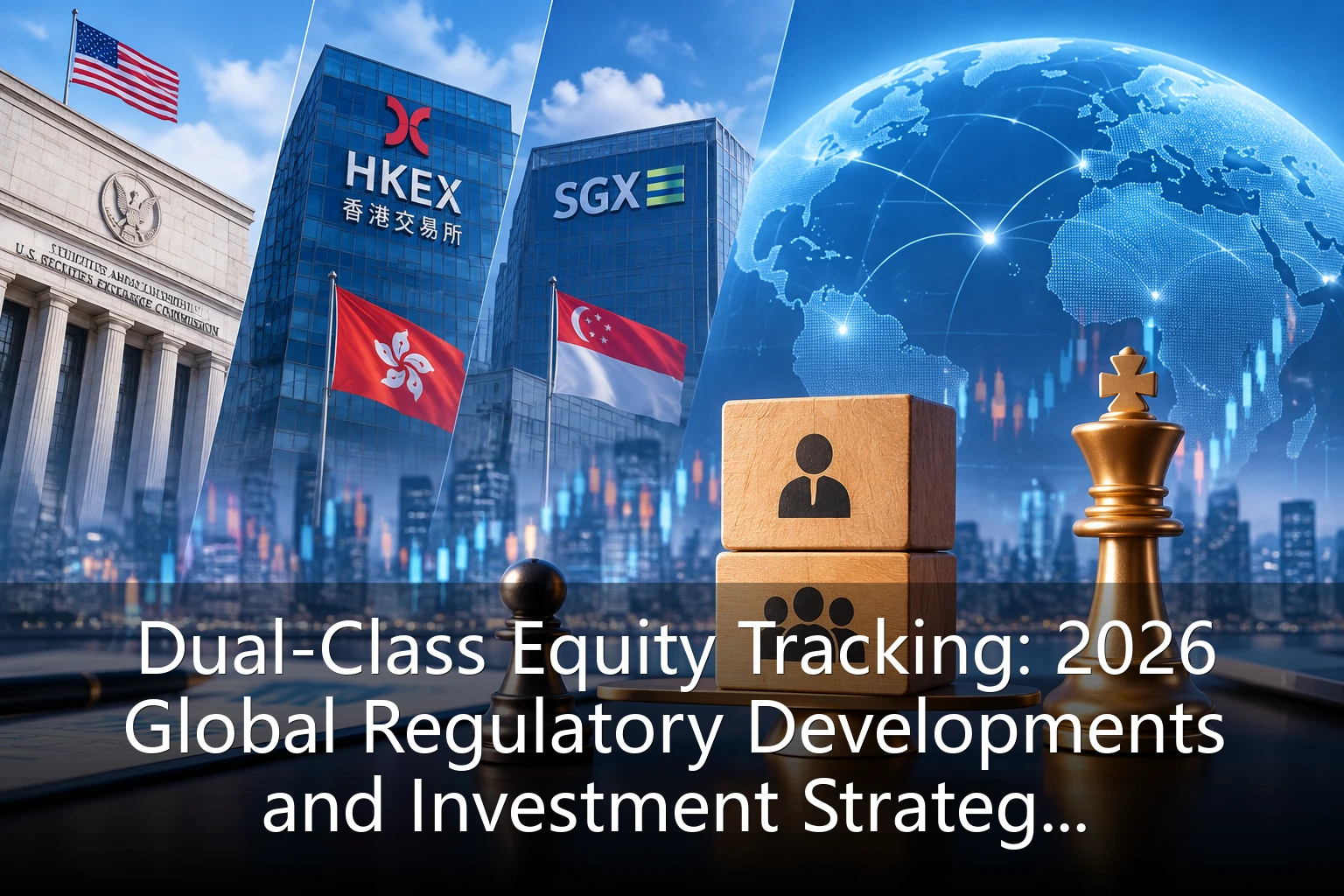
\n\nIn 2026, the global capital market's regulatory stance on dual-class equity structures has undergone a significant shift, from early laissez-faire to today's prudent regulation. This transformation has not only reshaped the corporate governance landscape but also profoundly impacted global investors' asset allocation strategies. With the implementation of new SEC regulations, HKEX's proposed tightening of listing requirements, and SGX's proposed mandatory sunset clauses, dual-class equity—a design once considered the breeding ground for Silicon Valley innovation—is now facing unprecedented scrutiny and challenges.
\n\nGlobal Regulatory Developments: From Laissez-Faire to Regulation
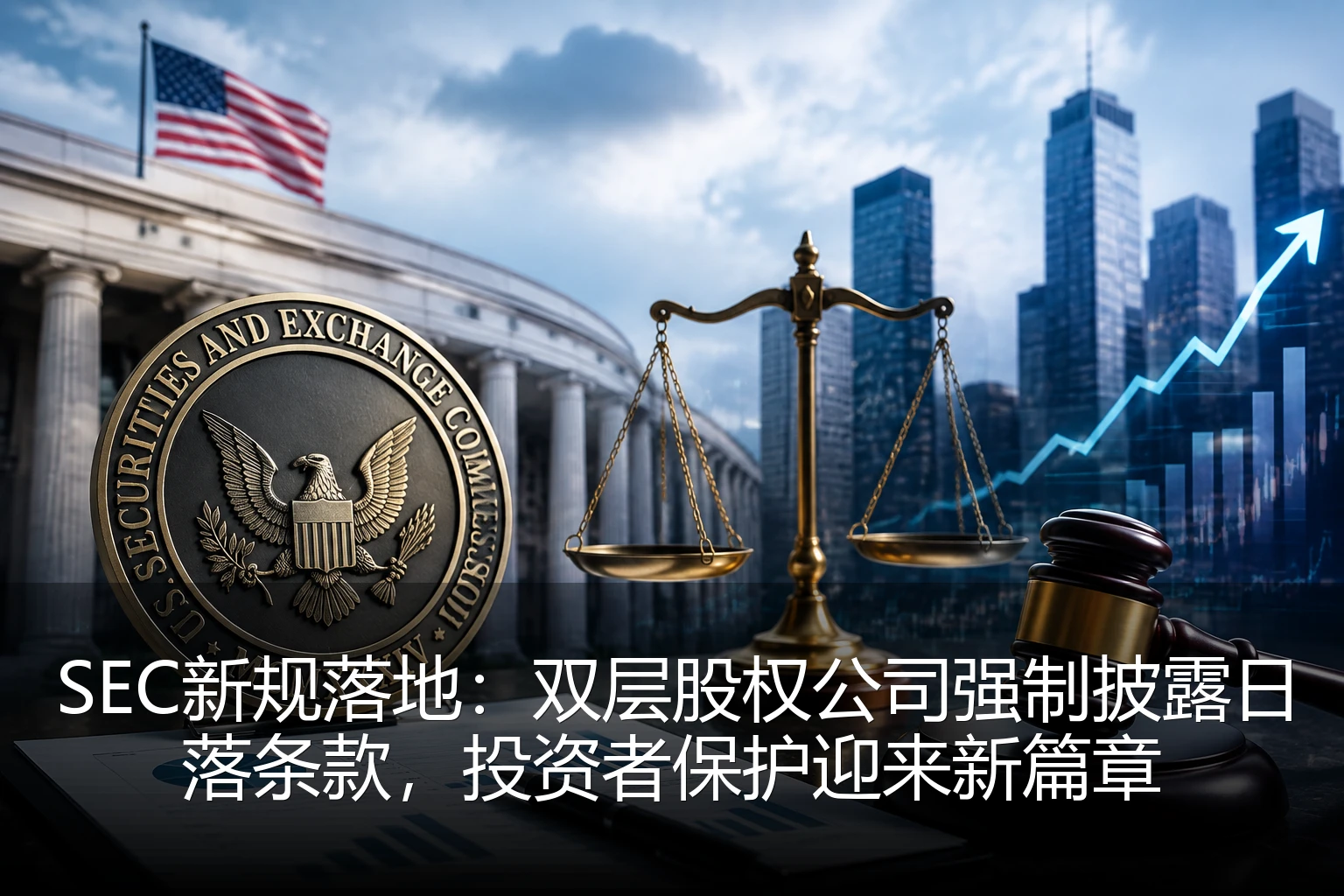
\n\nSince 2026, major global capital markets have significantly tightened their regulatory stance on dual-class equity structures. The U.S. Securities and Exchange Commission (SEC) formally implemented new regulations in June this year, mandating dual-class companies to disclose sunset clause details for super-voting shares in their prospectuses and periodic reports. This includes trigger conditions, implementation timelines, and conversion mechanisms. This measure is seen as an institutional constraint on excessive founder control, marking a significant advancement in investor protection mechanisms.
\n\nMeanwhile, the Hong Kong Stock Exchange (HKEX) also released a consultation paper in August, proposing to tighten listing requirements for dual-class equity companies. It requires companies with unequal voting rights structures to meet higher profitability requirements and limits the voting rights of super-voting shares to no more than 20 times that of ordinary shares. This policy shift reflects HKEX's rebalancing of market fairness and investor protection, especially against the backdrop of Chinese technology companies returning to the market. How to balance innovation incentives with risk prevention has become a critical challenge for regulators.
\n\nIn Asia, the Singapore Exchange (SGX) announced in early September its proposal to introduce mandatory sunset clauses for dual-class equity companies, making it the first major exchange in Asia to require all dual-class companies to set sunset clauses. SGX proposes that the maximum duration of sunset clauses should not exceed 15 years, and companies must initiate sunset clause evaluation procedures 10 years after listing. This initiative is seen as a milestone in the modernization of Asian corporate governance, expected to enhance Singapore's competitiveness as an international financial center while providing a regulatory reference for other Asian markets.
\n\nMarket Performance Analysis: The Dual Nature of Dual-Class Equity Structures
\n\nAccording to the latest Q3 2026 research data from Buguzhishi, companies with dual-class equity structures showed significantly divergent market performance in the first half of 2026. On one hand, tech giants with strong founder control such as NVIDIA and Tesla continued to lead the market, with stock price increases of 32.7% and 28.3% respectively, significantly outperforming the S&P 500's 15.6% increase during the same period. These companies, leveraging the foresight and long-term strategic vision of their founders, continue to drive innovation in cutting-edge fields like AI and new energy.
\n\nOn the other hand, companies with poorly designed sunset clauses or excessive founder control have faced market rejection. Data shows that in the first half of 2026, 12 companies with dual-class equity structures faced collective pressure from institutional investors due to governance issues, with 3 companies forced to initiate sunset clause conversion procedures ahead of schedule, leading to an average stock price decline of 18.5%. This phenomenon indicates that market tolerance for dual-class equity structures is decreasing, with investors paying more attention to corporate governance transparency and checks and balances.
\n\nIn terms of industry distribution, the technology sector remains the most concentrated area for dual-class equity structures, accounting for 62%, up 5 percentage points from 2025. The biotechnology sector accounts for 18%, remaining stable. The financial services sector has increased to 12%, indicating that traditional financial firms are becoming more accepting of dual-class equity structures. This distribution change reflects differences in long-term strategic needs for founders across industries and the market's reassessment of governance models for innovative enterprises.
\n\nInvestor Response Strategies: The Art of Balancing Risks and Opportunities
\n\nFacing the complexity and uncertainty of dual-class equity structures, investors need to establish more refined evaluation frameworks. Senior analysts from Buguzhishi suggest that investors should comprehensively evaluate dual-class companies from the following dimensions:
\n\n- \n
- Rationality of Sunset Clause Design: Focus on the trigger conditions, conversion mechanisms, and timelines of sunset clauses, evaluating whether sufficient balance mechanisms are established to prevent indefinite founder control. An ideal sunset clause should include multiple trigger conditions such as market value thresholds, time limits, and shareholder voting rights. \n
- Corporate Governance Transparency: Evaluate the quality of the company's information disclosure, particularly the frequency and detail of disclosures regarding the exercise of super-voting rights. Research shows that dual-class companies with high governance transparency generally outperform other companies in the same industry in the long term. \n
- Founder Capability and Reputation: Analyze the founder's past performance, industry influence, and ethical record to assess their ability and vision to lead the company's long-term development. The evaluation of founder capability should go beyond short-term financial metrics, focusing on their strategic vision and innovative thinking. \n
- Institutional Investor Participation: Pay attention to the background and stance of the company's main institutional investors and assess their influence on corporate governance. Experience shows that dual-class companies with active institutional investors generally have higher governance quality. \n
In terms of asset allocation strategies, investors can consider adopting a "core-satellite" approach, allocating most of their capital to core dual-class companies with well-established governance structures and reasonable sunset clauses, while allocating a smaller portion to satellite-type companies with high growth potential but higher governance risks, to achieve the optimal balance between risk and return.
\n\nFuture Trend Predictions: The Evolution Direction of Dual-Class Equity Structures
\n\nLooking ahead, dual-class equity structures will show the following development trends:
\n\n1. Continuous Improvement of Regulatory Frameworks
\n\nAs global regulators gain deeper understanding of dual-class equity structures, more refined regulatory frameworks will be gradually established. By 2027, it is expected that major markets will form unified sunset clause standards while introducing more investor protection mechanisms, such as requirements for independent director ratios and restrictions on voting rights for special matters. These regulatory changes will reshape the governance landscape of dual-class companies, pushing them toward more transparent and fair development.
\n\n2. Innovative Exploration of Governance Models
\n\nDual-class equity structures themselves will continue to innovate to meet new market demands. In the future, more diversified equity structure designs may emerge, such as differentiated voting rights based on different shareholder groups, performance-based dynamic voting rights adjustment mechanisms, etc. These innovations will attempt to maintain founder control while enhancing investor protection, achieving a win-win situation of power balance and value creation.
\n\n3. Deepening of Investor Education
\n\nWith the popularization of dual-class equity structures, investor education will become an important support for market development. Professional institutions will develop more evaluation tools and investment strategies specifically for dual-class companies, helping investors better understand the risks and opportunities of this complex structure. At the same time, regulatory agencies will also strengthen investor protection education, improving the overall risk awareness and judgment ability of the market.
\n\n4. Strengthening of Global Regulatory Coordination
\n\nWith the deepening of global capital market integration, coordination and cooperation among different regulatory agencies will be further strengthened. It is expected that more cross-border regulatory agreements will emerge in the future, unifying information disclosure standards and regulatory requirements for dual-class companies, reducing regulatory arbitrage space, and creating a more fair and transparent global market environment for investors.
\n\nConclusion: Finding Balance in Transformation
\n\nAs an important innovation in modern corporate governance, dual-class equity structures not only promote long-term corporate development but also bring challenges of power concentration and investor protection. The 2026 global regulatory developments indicate that the market is seeking a new balance point that both preserves the incentive effect of dual-class structures on innovation and prevents the risk of power abuse through institutional design.
\n\nFor investors, understanding the essence and evolution trends of dual-class equity structures and establishing a scientific evaluation framework are key to grasping this complex investment opportunity. With the constantly changing regulatory environment, investors need to maintain keen market insight, adjust investment strategies in a timely manner, and find the optimal balance point between risk and return.
\n\nIn the future, dual-class equity structures will continue to play an important role in global capital markets, but their form and connotation will continue to evolve with the changes in regulatory environment and market demand. For Buguzhishi, we will continue to track the latest developments in this field, providing investors with professional and in-depth analysis and advice to help them make wise decisions in the complex market environment.