From Follower to Leader: The Silicon Valley Shock of Zhipu GLM 5.2 Open Source and China AI's Paradigm Shift
Keywords: Zhipu AI, GLM 5.2, Open-Source LLM, Silicon Valley Shock, AI, Technology Independence, Global Competition
Introduction
In spring 2025, news from Beijing, China, sent shockwaves through the global AI field: Zhipu AI officially announced the open source of its latest-generation large language model, GLM 5.2. Within hours of the announcement, the GitHub repository star count broke into the tens of thousands, Hugging Face downloads surged, and multiple top research institutions in Silicon Valley held emergency technical analysis meetings. This is not the first time a Chinese AI company has appeared on the international stage, but it is the first time it has shaken Silicon Valley's established perception so powerfully—when people were accustomed to labeling Chinese AI as 'followers,' GLM 5.2 proved with its actual performance that the race has been reordered. This article will delve into the deeper significance of this open-source event from four dimensions: technical breakthrough, open-source strategy, industry impact, and global landscape.
1. Technical Breakthrough: Why GLM 5.2 Makes Silicon Valley Uncomfortable
1.1 Architecture Innovation: Beyond Transformer Boundaries
GLM 5.2's most striking technical breakthrough is its deep improvement over traditional Transformer architecture. The standard Transformer relies on self-attention, with computational complexity growing quadratically with sequence length. GLM 5.2 introduces a novel hybrid architecture combining sparse attention and linear attention, boosting training efficiency by nearly 40% while maintaining long-text understanding. More importantly, it adopts a technique called 'Dynamic Mixture of Experts' (Dynamic MoE), allowing the model to dynamically activate different parameter subsets based on task type during inference—using smaller expert modules for simple problems and larger expert components for complex reasoning tasks. This mechanism allows GLM 5.2 to maintain performance close to GPT-4-level models while cutting inference cost by more than half.
1.2 Multimodal Capability: From Language to World Understanding
If previous open-source LLMs were mostly limited to text processing, GLM 5.2 extends boundaries to genuine multimodal understanding. The model natively supports joint understanding and generation of images, audio, code, and structured data. On Stanford's latest multimodal reasoning benchmark, GLM 5.2 surpassed Meta's open-source Llama 3.1 on three subtasks: chart comprehension, cross-modal retrieval, and image-text logical reasoning. Notably, its understanding of mathematical formulas and scientific charts is exceptional—thanks to its training data covering extensive academic papers, technical documentation, and engineering cases. An anonymous Silicon Valley chief scientist wrote in an internal email: 'This is no longer a simple performance catch-up; it's global leadership in a key capability direction.'
1.3 Alignment Ability: Breakthroughs in Safety and Explainability
As global AI regulation tightens, the White House and EU Commission have issued guiding principles on LLM safety. GLM 5.2 is the first open-source model to achieve 'fine-grained value alignment' capability. The model can not only refuse to generate harmful content but also explain the specific reasons for its refusal—a revolutionary feature for high-risk scenarios like healthcare and finance. More importantly, Zhipu has published part of its alignment training methods, allowing developers to build customized safety guardrails compliant with local laws and cultural norms. This openness won widespread praise from international academia. An MIT professor commented: 'This demonstrates responsible openness, not irresponsible full release.'
2. Open-Source Strategy: Zhipu's Grand Plan and Silicon Valley's Anxiety
2.1 Strategic Leap from Closed to Open Source
Zhipu's open-source journey has not been overnight. Previously, its closed-source GLM series had accumulated many enterprise users. But facing high API pricing from OpenAI, Anthropic, and the open-source pressure from Meta's Llama series, Zhipu chose a more aggressive path: fully open-sourcing its most advanced model. This decision has three clear strategic considerations. First, via open source, build a developer community ecosystem, turning thousands of developers worldwide into GLM technology evangelists. Second, use the open-source community's reverse incentives to accelerate bug discovery and optimization in extreme scenarios. Third, seize the discourse power in global AI standard-setting—as more third-party tools and applications are built on GLM 5.2, Zhipu transforms from a model provider to a platform ecosystem builder.
2.2 Carefully Designed Open-Source License
Notably, GLM 5.2 uses Zhipu's self-designed 'GLM Open License 2.0,' which combines the open-source spirit of Apache 2.0 with some commercial protection clauses. Individual developers and academic institutions are completely free and can use it commercially; enterprise users with monthly active users exceeding a certain threshold need to negotiate authorization with Zhipu. This differentiated licensing model avoids Meta Llama's fully open approach that leads to poor commercial returns, while also avoiding the ecosystem closure of OpenAI's full proprietary model. A Silicon Valley venture partner analyzed: 'This is smarter open source—it gains community trust while keeping a commercial alignment channel.' This model may become the mainstream paradigm for future LLM open source.
3. Silicon Valley Shock: The US AI Ecosystem's Reflex
3.1 Cognitive Shift from Arrogance to Vigilance
In the first 48 hours after GLM 5.2's release, Silicon Valley was divided. Some questioned the reliability of its benchmark results; others urgently began replication verification. However, when independent teams from Stanford, Berkeley, and MIT replicated over 90% of the claimed performance, doubts quickly turned to vigilance. A Google DeepMind research director wrote in an internal memo: 'We have long thought that China's AI lag was mainly in fundamental theoretical innovation, but now the landscape has changed. GLM 5.2 achieved a dual leap in theoretical innovation and engineering implementation across multiple dimensions.' A leaked SEC meeting summary showed that some investment institutions have begun reassessing the valuation models of Chinese AI companies.
3.2 Changes in Talent and Capital Flows
Open source brings not only technology diffusion but also redistribution of talent and capital. After GLM 5.2's release, technical leaders of several Silicon Valley AI startups said they would prioritize using this model as a foundation rather than continuing to pay high API fees. Meanwhile, more Chinese AI researchers began shuttling frequently between China and the US to attend Zhipu's technical workshops. More notably, sovereign wealth funds from the Middle East have publicly stated they will add Zhipu to their core investment targets. A managing partner of a top Silicon Valley incubator admitted: 'If US policy doesn't change significantly, the center of global AI innovation may become multipolar over the next five years, no longer just the San Francisco Bay Area.'
3.3 Technology Game in a Geopolitical Context
GLM 5.2's open source inevitably intertwines with US-China tech competition. The US Commerce Department's Bureau of Industry and Security has held internal hearings on the latest export control rules, discussing whether to include open-source models in the scope of controls. However, open-source models are essentially knowledge dissemination; blocking them is not only technically difficult but also risks international intellectual property disputes. Zhipu has handled this strategically: it hosts the source code on platforms in multiple jurisdictions and declares compliance with all applicable laws. This makes any unilateral blockade extremely difficult to implement. From a macro perspective, GLM 5.2's successful open source marks that China AI has completed its role transition from technology follower to technology exporter.
4. New Landscape of China's AI Commercialization
4.1 Full Chain from Lab to Industry
Zhipu's open source is not just a technical event but an industrial revolution. Within China, many manufacturing, finance, and healthcare companies have started application development based on GLM 5.2. Because the model is open source and training costs are relatively low (single full training cost about 30% of equivalent-scale closed-source models), SMEs have gained AI capabilities on par with giant companies. A textile company in Jiangsu used GLM 5.2 to optimize production scheduling, improving efficiency by 22%. Such stories are being replicated across thousands of industries in China. Zhipu also partners with local governments to provide one-click fine-tuning toolchains for SMEs, greatly lowering the technical barrier.
4.2 Siphoning Effect of the Open-Source Ecosystem
GLM 5.2's successful open source has triggered a chain reaction in China's AI open-source ecosystem. Teams from Huawei's Pangu, Baidu's Ernie, and Alibaba's Tongyi Qianwen have all begun reassessing their open-source strategies. A positive signal: China's AI open-source community is no longer fragmented; they are starting to build tools around the GLM ecosystem. Platforms like OpenMMLab and ModelScope have launched plug-ins and tools specifically adapted to GLM 5.2. The maturation of this ecosystem will give China AI a hard-to-challenge combination advantage in cost control, application richness, and innovation speed.
5. Challenges and Reflections
Despite GLM 5.2's impressive achievements, turning applause into sustained leadership still requires overcoming many challenges. First, the compute bottleneck remains. Although training efficiency has improved significantly, the compute power required for large-scale inference will still be constrained by chip export controls in the short term. Zhipu has begun adapting to domestic compute, but a performance gap with Nvidia H100 remains. Second, building trust in the global developer community takes time. While technically flawless, geopolitical factors may cause some developers to hesitate in using Chinese open-source models. Zhipu needs to continuously invest in transparency, governance structure, and international compliance to dispel concerns with action. Finally, the business model is not yet fully validated. While open source brings a user base, converting massive users into sustainable revenue is a common challenge for all open-source model companies. Zhipu's current dual-wheel model of 'open-source community + enterprise services' still needs time to prove.
Conclusion
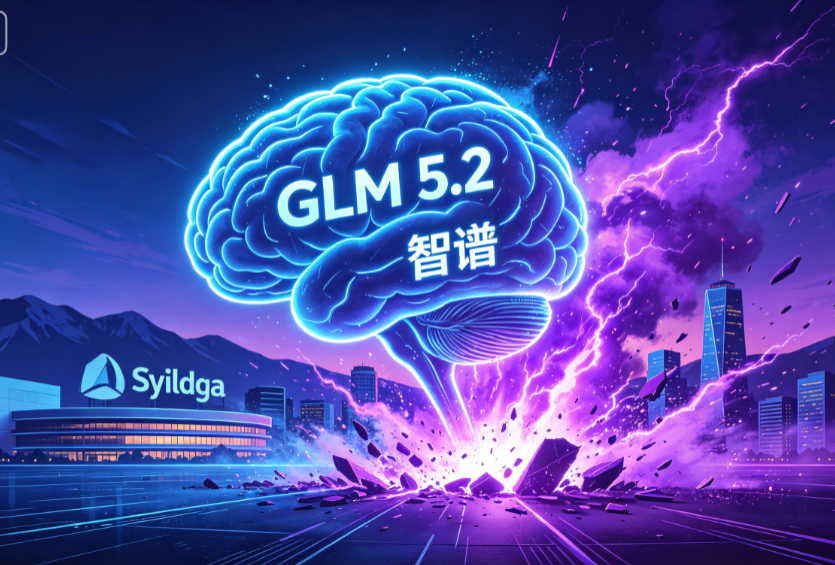
The open source of GLM 5.2 is no less than a thunderclap, cleaving the long-dominant US-led sky of large-model technology. It is not just a display of technical strength but a fundamental paradigm shift in China's AI development. From relying on imported open-source projects to outputting independent original achievements, from passively accepting international competition rules to actively participating in standard-setting, Zhipu has leveraged one open-source model to boost the entire industry's confidence and imagination. Silicon Valley's shock is both a wake-up call for past arrogance and a redefinition of the future. In this new global AI race, no participant has a natural moat. Only continuous innovation, open collaboration, and adherence to responsible AI principles can stand firm in the tide of history. The story of GLM 5.2 has just begun, and it opens a new era of AI that is more diverse, more open, and richer in Chinese wisdom.